Citizens for a Livable Cranbrook Society provides grassroots leadership and an inclusive process, with a voice for all community members, to ensure that our community grows and develops in a way that incorporates an environmental ethic, offers a range of housing and transportation choices, encourages a vibrant and cultural life and supports sustainable, meaningful employment and business opportunities.

Monday, July 19, 2010

Citizens for a Livable Cranbrook in Action

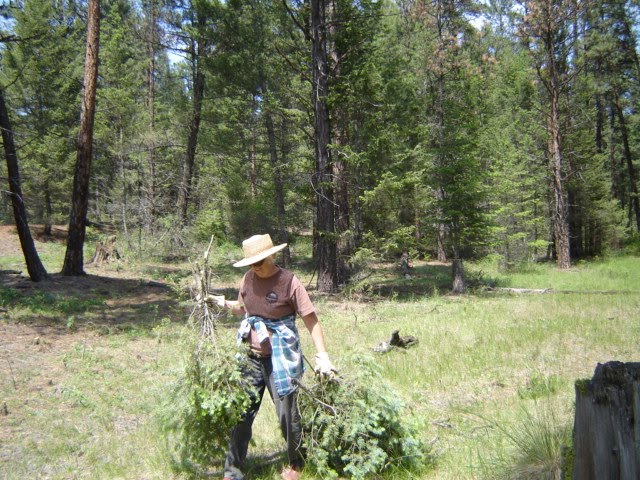
Members of Citizens for a Livable Cranbrook enjoyed participating in several beautification projects this spring and summer including Joseph Creek Clean-up, Tamarack Mall Planting and Eco System Restoration in the Community Forest.


Around Town and Looking Good


Native plants, local produce and local musical talent make summer Saturdays fun.


Saturday, July 17, 2010

Whats Happening...

Why not come by City Hall Monday night, July 19th at 6pm to attend the City Council Meeting. Find out how your council works and watch our elected officials in action.
On the agenda for this meeting:
Rails to Trails Committee Appointments
Fees and Charges Amendment Bylaw Leisure Services Dept.
Memorial Arena Improvements Temporary Borrowing Bylaw
Wastewater Capacity ImprovementsTemporary Borrowing Bylaw
Administration Updates include....Idlewild Park Memory Lane, Memorial Arena Renovation,Kinsmen Quad Ball Park

Tuesday, July 13, 2010

The Growth Management Study Mystery

Where is the Growth Management Study?

 
Cranbrook’s Growth Management Study was originally budgeted for in 2007.

From what we have been told repeatedly since December of 2009 (post East Hill Referendum), the Growth Management Study (for which the City has or will pay $450,000.00), has been returned to the Consultants because the City staff were not satisfied with it. At that time we were led to believe the study would be released by the summer of 2010. When asked at the Brown Bag Lunch of April 28th if there would be an extra cost to this, Mayor Scott Manjak indicated he hoped the consultant company would not have the audacity to charge more. No release time for the study was available yet.

When asked again at the Brown bag Lunch of June 1st about a release date for the study, none was available. Mayor Manjak assured the public they would be shown the final copy of the study when it is available.

As of June 29th Mayor’s Brown Bag Lunch we have been advised this long awaited study should be available to the public by July or August.

Mayor Vents, CLC Responds

As printed in the Daily Townsman on July 2,2010 by Bonnie Bryan

The mayor of Cranbrook expressed concern at the Citizens for a Livable Cranbrook Society's (CLC) activities in the community at Mondays regular Council meeting and said he and Councillors will be speaking up when it comes to this group.
"I want you to know as mayor I will no long be silent on the actions and misinformation of the Citizens for a Livable Cranbrook," Mayor Scott Manjak said at the end of the meeting. "They have continued to create division in Cranbrook by suggesting we are not acting in the public interest.
"I will not be silent any longer and I will respond when required to protect the employees, the businesses and resident and their interest when they are under unfair or unreasonable attack from the Citizens," he said. "As mayor I should and must defend the attacks on City staff when they are unfair and I'm obligated and frankly, allowed, to defend my council when we are attacked as well."
Manjak cited letters to the editor, submissions to Council, and the actions of the CLC leadership at public meetings as examples of the group creating division among the citizens of Cranbrook.
"The leadership of the CLC creates mistrust and conflict for specific reason, which is to advance their specific agenda, which at the end of the day is political.," he said. "They want what every special interest group wants, which is to control what happens in the city."
Included in that night's Council package was an update on tendering costs to the City the construction of water and sanitary sewer mains through Havaday lands so the Shadow Mountain development can connect to City services. A letter from the CLC regarding the project was printed in the June 24th Daily Townsman and was included in the written submissions regarding the needed amendment to the Five Year Financial Plan to allow the project, and in it the group questioned if the City should financially support the development.
"In my opinion this issue has been completely blown out of proportion by CLC. They have attacked our City staff for providing poor planning to the community on development and they have attacked this Council as being incompetent in the approval of development and have insinuated that we are using property taxes to support developers, none of which is true," Manjak said. "Tonight Council passed an amendment to our Five Year Financial Plan that allows us as a community to use money form the Development Cost Charge fund and our utility reserves to build 7oo metres of water and sewer lines. We made the right decision tonight. With it, investment, jobs and growth will continue and that is exactly what Citizens for a Livable Cranbrook don't want."What we don't know is what they stand for. They have never declared what we all know, who have paid attention to these things, is that they are anti-investment, anti-growth organization that is similar to the Wildsight movement in the East Kootenay."
Sharon Cross, president of the CLC said she was disappointed in what she heard Monday night and that the CLC was put in such a light.
"What I would suggest is if people have concerns with some of the allegations being made, that copies of our correspondence are available at our website (www.livablecranbrook.org). I think they speak for themselves," she said. "I think its really important people know we're a very diverse group of citizens with a strong interest in our community. We always have encouraged debate with a wide base of community citizens in order to open up discussions on the issues that affect us all.
She said the group is not anti-growth.
"we're interest in economic diversity, social planning and environmental sustainability, which are all involved with growth. We've never been anti-growth, we just have a different perspective of what that might look like." Cross said. "CLC asks questions of our elected official on matters that we feel are relevant to our community and if Council take exceptions to our asking questions, that's there prerogative. It is also our right as citizens and taxpayers to ask those questions and sometimes challenge the status quo.. We have different ideas, that's all."
Manjak said what the CLC is doing has gone beyond constructive criticism.
"In any healthy democracy constructive criticism is needed and desired. This is not what we have. It's time that we as a community stand up for what we believe and stop this ridiculous political dance and defer it to its rightful place which is the November 2011 election." he said. "Until then I and others, members of this Council. will no longer remain silent when we see the misinformation and propaganda from the leadership of the citizens in the local newspapers and on the Internet."

Friday, July 9, 2010

Whats Happening...


This weekend, if your a gardener, why not take part in the Cranbrook Garden Club Annual Open Garden Day Tour. Sunday July 11 between 10am - 4pm you can tour 6 stunning gardens in Cranbrook. Tickets are $10.00 and are availabe at Top Crop or at the Prestige Inn the day of the event. Go and be inspired!

Thursday, July 8, 2010

The Cranbrook Community Forest; Another Reason to Love Cranbrook


On Saturday, June 19 the Cranbrook Community Forest Society in conjunction with the Ministry of Forests and the Rocky Mountain Trench Society took part in a eco-restoration and fire supression work bee. With the assistance of 30 volunteers we were able to clear several hectares of the forest and hope to make this an annual event in which our entire community can take part. The weather was perfect and a BBQ was held for the hungry workers. Thanks to all those who participated.

Visions of a better Vancouver could help build a better Cranbrook

This Op-Ed article on the www.thinkcity.ca blog is an interesting look at how Vancouver is trying to integrate various socio-economic classes,businesses, and cultural facilties to build a vibrant city.


Vancouver has a world-wide reputation for planning expertise. Many former City of Vancouver planning staff went on to work on significant projects in China, Abu Dhabi, and Dubai.

What put Vancouver on the world planning map is the concept of “Vancouverism”, which is basically a means of creating mixed-use developments that are environmentally, socially and culturally sustainable. It started many years ago under the planning director of the day, Ray Spaxman, and was further developed by Larry Beasley.

A component that cannot be overlooked is the inclusivity required to have a city that truly works. Mike Davis, a renowned planner and academic at the University of California, has studied very different approaches that are based on the separation of people along the lines of wealth, occupation and race.

This is typical of many American cities where low-income people are ghettoized and those with money are enclosed in gated communities that exist to keep out lower income people and people of colour. Mike Davis calls this approach “spatial apartheid”, which in my opinion, is clearly not the way to develop a livable city. This approach leads to isolation, hostility and violence.

The emerging trend in Vancouver is to strive for the polar opposite of spatial apartheid. The best example of this is Woodward’s. The redevelopment of Woodward’s set out to accomplish many things on a small but yet very strategic piece of land. The community was involved in all aspects of the development process – and that process included 4,000 people that came to co-design sessions to give their vision of how Woodward’s should work. There was a community advisory committee, co-chaired by a long term Downtown Eastside resident, Lee Donahue, along with the Chair of Gastown Business Improvement Association, Jon Stovall. This collaborative approach led to a project which functions in so many ways to improve the community and the social and cultural aspects of Vancouver.

Approximately 50 BladeRunners, who are primarily aboriginal street involved youth, worked on the construction of Woodward’s. Retail on the site includes a highly sought after Woodward’s food floor run by Nester’s, a London Drugs, a Subway and J.J. Bean Coffee, whose head office and roasting facility is located in the Downtown Eastside.

Building Opportunities with Business (BOB) and Jim Green and Associates worked with these retailers and with Simon Fraser University, whose School for the Performing Arts is also part of the redevelopment, to recruit local residents and train them for positions.

The recycling in the Woodward’s complex has been contracted to Recycling Alternatives, a neighbourhood business that hires locally, while the refundable containers are managed by United We Can, a Downtown Eastside non-profit. Security for the complex is provided by the Portland Hotel Society, a well known non-profit operating in the Downtown Eastside. There are 200 units of social housing and a childcare facility, as well as W2, a non-profit media arts collective, which will soon be operating a social enterprise coffee shop on the site.

Woodward’s also features 500 units of market condominiums, some of which were sold at reduced prices to Downtown Eastside residents. Many of those buyers work for organizations such as the Portland Hotel Society and other non-profit organizations. Simon Fraser University’s School for the Contemporary Arts is committed to providing access to their facilities and events to local residents and organizations.

According to Dr. Pier Luigi Sacco, the Downtown Eastside is already the centre of culture in the city and I believe very strongly that there will be a synergy between W2, SFU with its five theatres, and the community. I believe this will bring great benefits to the whole city.

I have said on many occasions that Woodward’s is the model for the future, and I think that we are beginning to see that happen in places like the Olympic Village that have many of the components that Woodward’s first embraced.

In my current work with the Holborn Group on the redevelopment of Little Mountain, I can see many similarities with Woodward’s, especially the challenge of inclusivity. Little Mountain has a strong community advisory group that meets regularly and is well-educated on planning concepts and procedures. This group, which is open to anyone who would like to join, is an invaluable part of the redevelopment team. Holborn has also agreed to offer employment opportunities to the Musqueam people.

Little Mountain, which was the first social housing in Vancouver, was demolished for the redevelopment – but part of the arrangement between the provincial government, the city, and the Holborn Group is that the 224 social housing units that were on the site will be replaced and former tenants will have the opportunity to come back and live there. We are also looking at the possibility of including the Little Mountain Neighbourhood House in the plan, along with retail and possibly childcare. The plan is that it be architecturally significant and achieve LEED Gold. The possibility of including more social housing and affordable rental will be considered as well.

An interesting sideline to this redevelopment is that from the land costs and profits generated, the provincial government will invest half the money in social housing in Vancouver and the other half throughout the province. The province and the city, along with Streetohome, have just announced $225 million for 1,006 social housing units in Vancouver, and part of that funding is expected to come from the redevelopment of Little Mountain. This is a unique situation in which the redevelopment of a social housing project is being used to generate funds to finance other off-site social housing. The precedent for this is Woodward’s, which generated 200 units of social housing off-site, known as the Lori Krill Housing Co-op.

According to Housing Minister Rich Coleman: “the capital that Little Mountain will bring will actually create another thousand units of social housing…this is the right type of housing, which is supportive housing.… It’s really smart leveraging of an asset to actually do more in the areas that you need it the most."

It is imperative that we use every tool at our disposal to produce the housing that is so badly needed in our city and province.

Jim Green is the principal of Jim Green and Associates and served on Vancouver City Council from 2002 to 2005.

Lessons of Whitefish; A warning for Cranbrook

This article was reprinted from the FlatHead Beacon. ITs an interesting example of what happens when a city is counting on development to be the economic driver of growth.

It was early 2009 when, following the tragic death of its finance director and departure of its city manager, Whitefish began to get its finances in order. Amid a recession that had hammered budgets elsewhere, the municipality remained quite optimistic. It reported having robust cash reserves and officials there were confident building permits would pick up again.

Meanwhile, in Kalispell, the situation was dire. The finance director estimated that the city’s cash reserve could fall to a dismal $171,700. Department budgets had already been gutted and more cuts were considered. An already bleak outlook had only worsened.

Since then, however, the two cities’ finances have taken opposite routes.

By early 2010, Whitefish began bleeding money. Its city manager, Chuck Stearns, announced four layoffs, three from the building department, and said it appeared the city would finish the fiscal year in the red. He asked employees to take furloughs, ordered a hiring freeze and barred out-of-state travel.

It was hard to fathom. The fastest-growing city in the state, one that had a reportedly stable budget just a year prior, was going broke. While $400,000 was lost to a Montana Supreme Court ruling against the city and property tax money was coming in more slowly due to the number of protests in an appraisal year, Whitefish’s biggest mistake was betting on growth. It lost badly.

Revenue from planning and building permits plummeted and Stearns acknowledged that revenue estimates for each were “very aggressive and optimistic.” The municipality had banked on building to finance government and, like Kalispell before it, had lost its cash cow. The difference is Whitefish waited even longer to face this new reality, and is paying dearly because of it.

Departments there are now bracing for a second round of layoffs, this one even deeper than the first. Police and fire departments, with jobs on the line, are warning of the public safety risks that would accompany lost personnel. The proposal hopes to increase budget reserves to $287,759, but the government parings would have been less shocking had the city acted earlier.

Since early 2009, the city of Kalispell has been functioning as a bare bones operation. Interim City Manager Myrt Webb, and his successor Jane Howington, have been refreshingly blunt with city officials about its finances and the city council has slashed expenses accordingly.

As 2010 approached, Kalispell’s reserves remained dangerously low, but appeared to be stabilizing. And at its most recent preliminary budget meeting, the city projected that its cash reserves will double, from $244,122 to $556,457.

That number is still far from ideal for a city its size and has come at a steep cost. Howington acknowledged as much. “Our capital plan is pretty abysmal,” she said. “But we’re able to provide good basic services without having our residents suffer.”

Anymore, that’s about all people can expect unless they want to pay more for services. In many cash-strapped cities, tax hikes have accompanied budget cuts, which is an especially raw deal.

Many cities across the country face similar fates as those in the Flathead Valley: Growth that once helped subsidize government expenses has all but disappeared. Few could foresee the economy getting this bad and the housing and construction market experiencing such a drawn-out lull. But moving forward, city officials should stop counting on building dollars they previously relied on.

All budget projections are arbitrary, but erring on the side of stagnant to little growth – even in burgeoning communities – just may prevent future layoffs and tax hikes.

Kellyn Brown
Flathead Beacon

Monday, June 21, 2010

Is this how the city should be spending our money??

June 15, 2010


TO: Mayor & Council

Re: Proposed Amendment to Five year Financial Plan (2010 to 2014) Bylaw No. 3683, 2010

The Five Yr. Financial Plan was approved on March 22, 2010. At that time development at Wildstone was already stalled. The need for the city to pay to extend services through Wildstone to a connection with Shadow Mountain must have already been known before this document was approved. Why is this only being addressed now? Why did the City give subdivision approval to Shadow Mountain, and allow the developer to sell the lots, enabling owners to build before services are hooked up? How are the new owners going to respond if they have constructed houses they cannot occupy? Could the City face legal action from these new owners?

The City has really no option but to pay the $1.1M (more or less) for a costly extension of services to make good on its premature subdivision approval. There is already a record of the City having to rescue homeowners from premature subdivision and occupancy approvals. This particular development is a speculative high-end recreation project. Should the City financially support this form of development while little is done to address the more urgent need for affordable housing? Housing that would meet the needs of full-time residents. It’s the full time residents that work in, and support our local economy.

We understand that to pay for this extension, $633,000 will be taken from DCC (development cost charge) Reserve Funds, $346,000 will be taken from Water and Sewer Fund Accumulated Surplus, and an additional $121,000 will be contributed by the City as a “developer assist”. It is claimed that the depletion of reserve funds “will be recovered in its entirety through connection fees when development of the Havaday (Wildstone) lands proceeds.”

With DCC’s at only $2,032 per lot, and with residential development being the lowest of the city’s six property tax categories, we could be waiting for a long time to see any significant recovery of the costs of this project. When we consider that the City also contributes an 11% (taxpayer funded) assist of $121,000, it begs the question - does development really pay for itself?

Over the long term, it’s the citizens that pay for leapfrog development and poor planning.

Once again, the City’s actions have placed the taxpayers between a rock and a hard place. By not following due process during the initial stages of development of Shadow Mountain, taxpayers are faced with no alternative but to pay for construction that should have been paid for by a developer. This situation makes a total mockery of this public comment process. How can Council in good conscience remain objective, when as a result of premature approvals, the decision has already been made?

Yours truly,


Sharon Cross, President